

 Contact Us


Customer Story
Global Port Operations Leader
Logistics Giant Secures Critical Maritime Infrastructure and Eliminates Blind Spots by Replacing Legacy Competitor
A global port operator displaced a legacy NDR competitor with ExtraHop to secure critical maritime infrastructure. By gaining visibility into agentless devices and east-west traffic, the organization mitigated ransomware risks. Seamless CrowdStrike and other critical application integrations now provide a unified, 100% visible defensive posture across all ports.

Overview
Delivering the Best Solution
The organization selected the ExtraHop modern NDR platform to displace the incumbent, successfully delivering:
Unified Visibility
ExtraHop eliminated critical east-west traffic and unmanaged asset blind spots. It provides native, line-rate decryption and broad protocol support for devices that cannot host agents.
Resilient Port Protection
The operator secured sensitive maritime infrastructure against ransomware. It did this without introducing performance impacts to high-volume shipping and logistics flows.
High-Fidelity Detection
The Security Operations Center (SOC) achieved a massive reduction in alert noise. This allowed the team to shift from manual data collection to high-priority threat hunting.
Scalable Integration
ExtraHop provided a comprehensive, scalable security solution. It integrated seamlessly with the existing CrowdStrike platform via API, overcoming previous integration failures.
Challenge
Port Security and Invisible Ransomware Risks
As a maritime logistics leader, this organization manages critical infrastructure where downtime ripples through the global supply chain. Protecting these hubs is vital, yet the organization faced severe visibility gaps across port environments that legacy tools and endpoint security could not address.
01
Critical Visibility Gaps and Network Blind Spots
The organization lacked visibility into port devices. Many mission-critical assets were unable to support endpoint agents, leaving the team blind to device-to-device communication. This lack of east-west visibility meant that lateral movement and network-based threats could propagate undetected across the infrastructure.
02
Ransomware and Operational Downtime Risk
The urgency for a modern NDR solution peaked in 2024 when a competitor's port was hit with ransomware, resulting in a two-week shutdown. This wake-up call proved that the organization's existing security posture could not ensure the continuous operation of its global shipping sites.
03
Troubleshooting and Fragmented Workflows
The network team lacked in-depth visibility into how port devices connected back to the central datacenter. Without high-fidelity network records or packet capture, troubleshooting performance and security issues remained a manual, time-consuming process. Additionally, a legacy NDR competitor failed to provide confident integration. Without a unified view or streamlined integration with key applications like CrowdStrike, the organization faced significant operational burdens correlating data from disparate systems.
Solutions
Unified Detection with ExtraHop NDR
ExtraHop successfully displaced the incumbent NDR vendor by proving its ability to provide unified security coverage. The platform met the organization's strict performance and scalability requirements. The key outcomes and advantages delivered to the organization include:
01
Unrestricted visibility and decryption
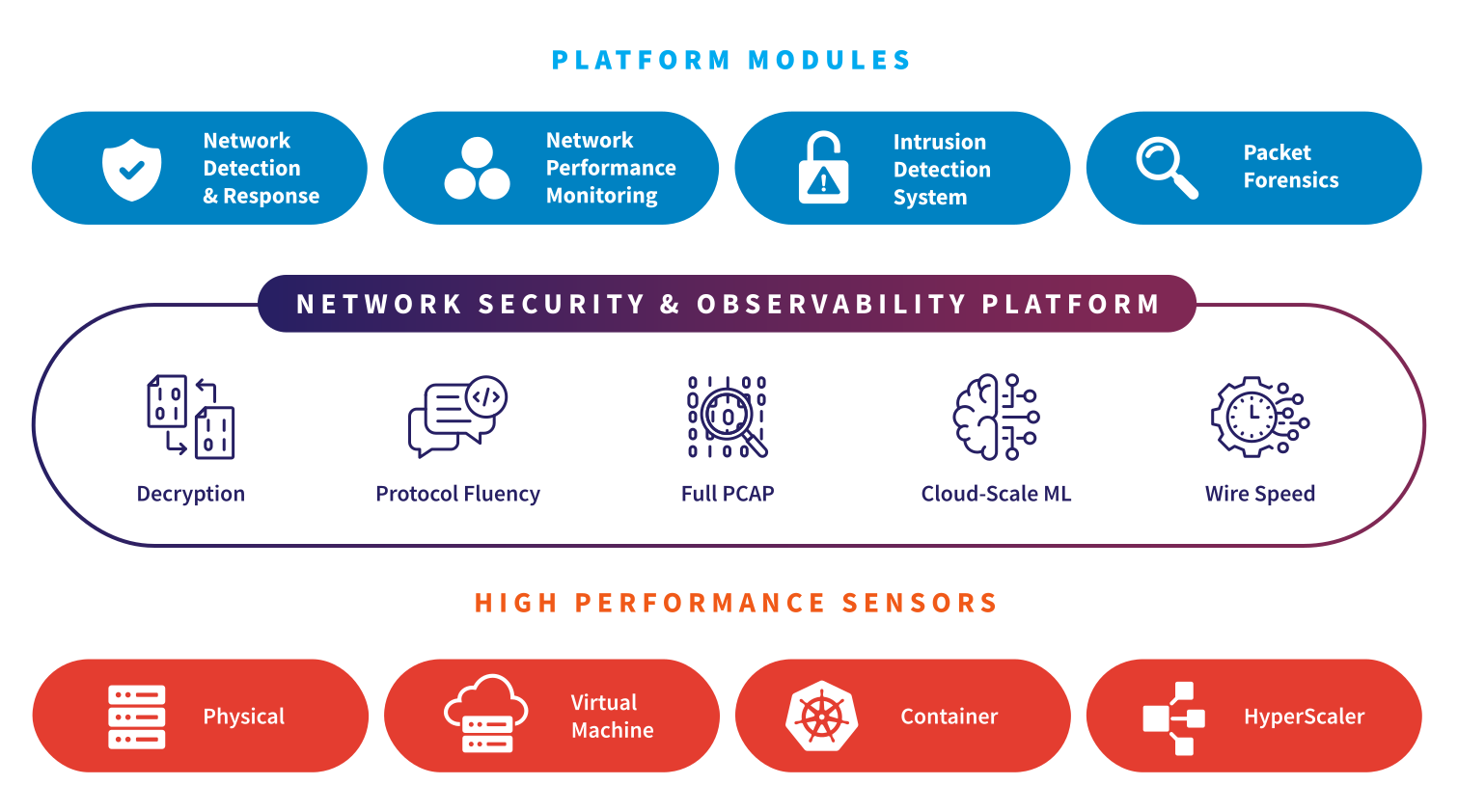
The organization secured the required forensic depth and network control when it deployed ExtraHop. The platform analyzes 100 Gbps of east-west traffic and uses high-speed decryption to immediately find threats previously hidden within encrypted flows.
02
Reduced alert fatigue via high-fidelity detection
The cloud-scale machine learning built into the ExtraHop platform lifted the SOC's operational burden. High-fidelity, low-noise detections allowed analysts to move focus from false positives to highly reliable network activity. This signals true post-compromise threats and endpoint detection and response (EDR) evasion tactics.
03
Actionable context and identity
The security team achieved comprehensive insight by using identity-based investigation. This links malicious network activity directly to user and service accounts. It finally enables the detection of all missed lateral movement attacks.
04
Streamlined incident response via ecosystem integration
ExtraHop fundamentally simplified incident response workflows. It established itself as the definitive source of network truth. The platform automatically feeds high-value contextual data to the customer's existing SIEM and EDR platforms.
05
Unified security platform
The organization gained efficiency and reduced complexity by consolidating NDR, NPM, and IDS capabilities. This created one unified, integrated solution for comprehensive network security and observability.
06
Deep protocol coverage for core assets
The organization mitigated major risk by gaining deep fluency. Parsing over 90+ protocols allowed for accurate decoding of all traffic, including sensitive database communications, without introducing performance risk. This was critical for detecting hidden AD attacks and lateral movement.
PLATFORM
RevealX NDR
Use the power of network visibility and AI for real-time detection, rapid investigation, and intelligent response for any threat.
Results
Resilient Maritime Operations and Unified Defense
The port operator achieved immediate, transformative security improvements and closed critical infrastructure gaps following the deployment of the ExtraHop RevealX NDR platform.
Decisive Platform Selection
The organization successfully selected ExtraHop an NDR competitor after a long competitive POC. This fixed critical east-west visibility and unmanaged asset blind spots. The implementation also solved long-standing integration and technical support issues.
Gained Global Supply Chain Protection
ExtraHop provided essential visibility for sensitive port devices that were unable to host endpoint agents. This allowed the organization to proactively protect core logistics operations from ransomware events. This security was achieved without compromising the movement of high-volume maritime traffic.
Maximized SOC Focus
The organization achieved a substantial improvement in operational efficiency through high-fidelity detections and granular network records. This empowered the security team to shift from manual troubleshooting to high-priority incident investigation. The team now conducts proactive threat hunting across all port sites.
Closed Integration Gaps
The new platform closed all ecosystem gaps via a comprehensive API and CrowdStrike integration. This established a single source of network truth. It provides seamless, high-value data feeds to the managed service provider application and existing internal security platforms.
Unified Port-to-Datacenter Control
For the first time, the organization gained a scalable and holistic security solution across its entire global maritime enterprise. By providing deep protocol analysis and the option for full packet capture, ExtraHop overcame the limitations of previous tools. This ensures the continuous protection of mission-critical port assets.